Bureau of Investigation
Killers of the Flower MoonThe Bureau of Investigation began as a modest federal agency with broad but uneven duties and limited authority. Its unsuccessful investigations of murders in Osage County became a crisis for the bureau’s new director, J. Edgar Hoover, and a test of whether the agency could confront a case compromised by its own failures.
Origins and Mandate
President Theodore Roosevelt created the bureau in 1908 to address gaps in federal law enforcement. When Tom White joined in 1917, it had only a few hundred agents and a handful of field offices. Its work ranged from antitrust and banking violations to the interstate shipment of stolen cars and other prohibited materials, escapes from federal prisons, and crimes on Indian reservations. The bureau was not yet a national police force with broad powers: its agents were expected to gather facts, and they lacked authority to arrest or carry guns. In 1935, the agency would be renamed the Federal Bureau of Investigation.
Reorganization and the Osage Investigation
The Bureau’s institutional crisis unfolded amid the Teapot Dome scandal. In 1924, an investigation revealed that oil baron Harry Sinclair had bribed Interior Secretary Albert Fall to drill in the federal petroleum reserve. The ensuing scrutiny exposed officials using surveillance, break-ins, and phone taps to obstruct Congress’s inquiry into the Justice Department. After President Calvin Coolidge replaced William J. Burns with Harlan Fiske Stone as attorney general, Stone concluded that the growing country and its expanding federal laws required a national police force—and that the Bureau needed to be remade to provide one.
Stone chose the twenty-nine-year-old deputy director, J. Edgar Hoover, as acting director. Hoover had never worked as a detective, made an arrest, or taken part in a shoot-out; he had, however, overseen the Bureau’s intelligence division, which spied on people because of their political beliefs. Seeking the permanent directorship, he concealed the extent of that surveillance work and promised to disband the division. He also pressed reforms that matched Stone’s demands and his own ambition: reviewing personnel files for incompetent or crooked agents and requiring new recruits to have legal or accounting knowledge. Stone appointed him director in December 1924. Hoover would turn the Bureau into a far more centralized force, one that he would use both against crime and, later, to abuse power.
The Osage murders threatened Hoover before that transformation was secure. After the Osage Tribal Council asked the Justice Department for help in 1923, Burns had sent Bureau agents to investigate a series of killings that had already claimed at least twenty-four Osage. One agent spent weeks in Osage County before concluding that “any continued investigation is useless”; later deployments also failed. The Osage themselves had to help finance the federal inquiry, at a cost that eventually reached $20,000. Once in command, Hoover planned to return the case to state authorities, and the Oklahoma field-office chief assured him the transfer could be made without “unfavorable comment” in the press.
That effort to contain the Bureau’s responsibility collided with the consequences of its own undercover operation. Agents had persuaded Oklahoma’s new governor to release Blackie Thompson, a convicted bank robber, so he could gather evidence among people connected to the Osage killings. The Bureau lost track of him in the Osage Hills; he robbed a bank and killed a police officer. The state attorney general blamed the Bureau for the investigation’s failure, while John Palmer accused officials of allowing capable officers to be removed and dishonest ones to escape scrutiny. Hoover regarded the situation as “acute and delicate”: another public scandal, so soon after Teapot Dome, could imperil his position.
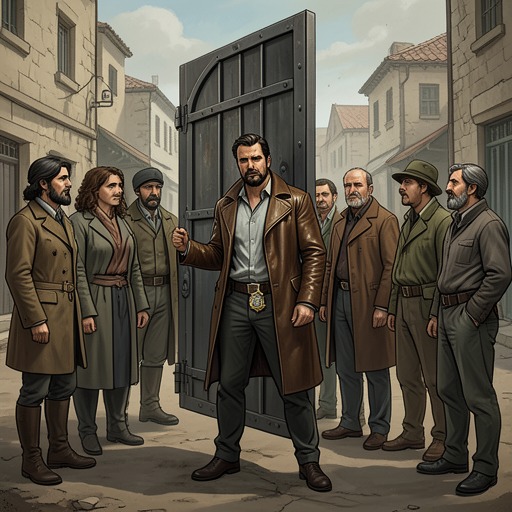
Hoover summoned Tom White, one of the Bureau’s few experienced agents, and ordered him to take charge of the investigation. White understood that the assignment could burden his family and that earlier investigators had been banished or driven out after failing. He also knew that men pursuing the killers had themselves been killed. He accepted the mission, recognizing both the Bureau’s need to recover from its mistakes and the personal danger attached to doing so.
Fieldwork, Missing Evidence, and the Bureau’s Record
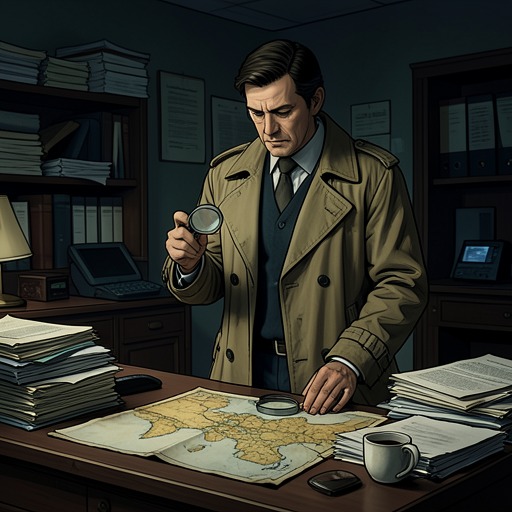
After Tom White took command, the Bureau of Investigation relied on agents working under ordinary disguises to enter Osage County and gather information. Two operatives presented themselves as Texas cattlemen and became acquainted with William K. Hale, while another opened an insurance business in Fairfax to approach suspects under the pretense of selling policies. John Wren, who had lived among Indigenous people, posed as a medicine man searching for relatives and attended tribal gatherings, where he could speak with Osage residents who might not talk to a white lawman. The undercover strategy widened the Bureau’s access, but it could not restore evidence already lost or prevent new gaps from shaping the inquiry.
In Anna Brown’s case, the coroner’s inquest records had vanished. The Fairfax justice of the peace said his desk had been broken into and the testimony taken. Little other crime-scene evidence had been preserved. An undertaker had secretly kept Brown’s skull, which White examined: the entrance hole indicated a small-caliber pistol, and the absence of an exit wound suggested the bullet remained inside. Because an autopsy should have revealed it, its disappearance implied that someone at the scene had removed it, though the surviving evidence did not identify who. The missing file and missing bullet were not simply blanks in the record; they narrowed what investigators could establish while leaving the possibility of interference unresolved.
The Bureau’s later files preserved both useful leads and their limits. A grand-jury transcript from 1926 included testimony by Ernest Burkhart and Dick Gregg, but not by H. G. Burt. Other records described Burt as closely associated with Hale and recorded suspicions about his role in the deaths of George Bigheart and W. W. Vaughan. The case against Burt remained circumstantial: documents and informant accounts connected him to money, guardianship, and Vaughan’s final journey, but did not establish every detail of either killing. The Bureau’s archive thus held evidence that could reopen questions even as its earlier investigation had failed to settle them. In the later inquiry, thousands of government and legal documents—alongside family research and testimony—became a means of examining not only what the Bureau had found, but what its records could not conclusively prove.
Records, Memory, and the Unclosed Cases
The Bureau of Investigation’s files did not amount to a complete account of the lives its agents entered. During the period when the bureau’s agents finally arrived in Osage County, few authoritative records documented Mollie Burkhart’s existence, and none established what she thought of the investigation. The record does show the Shoun Brothers repeatedly coming to her home and injecting her with insulin, then described as a new miracle drug. That silence makes it impossible to treat the surviving file as a transparent record of what happened: the investigation’s documents preserve some actions while leaving Mollie’s experience largely beyond their reach.
The later review of the cases also challenged the bureau’s claim to have brought the killings to a definitive end. After William K. Hale and his conspirators received life sentences, authorities treated the cases as closed, although the bureau had not connected Hale to all twenty-four murders. The unanswered questions included who abducted Barney McBride in Washington, D.C., and who threw W. W. Vaughan from a moving train. The distinction mattered: proof against some conspirators in particular murders did not establish responsibility for every death attributed to the wider violence. The bureau’s closure of the cases thus stood beside unresolved killings, rather than settling them.
Family records and archived Bureau of Investigation materials later supplied leads that the original inquiry had not resolved, but they also required careful limits on what could be concluded. Research assembled by Vaughan’s relatives included newspaper clippings, his death certificate, and an informant’s account that Vaughan had said he possessed sufficient evidence to put William K. Hale in the electric chair. Newspaper accounts placed H. G. Burt aboard the train with Vaughan and said Burt reported his disappearance; a bureau informant later named Burt as the person who had carried out the killing. These details strengthened suspicion, but they did not reconstruct exactly how Vaughan died or establish the full chain of responsibility. The later investigator who presented the findings to Martha Vaughan acknowledged that uncertainty rather than treating an accusation as a verdict.
The archive itself became part of the story. Research into the murders drew on Bureau of Investigation files alongside autopsy reports, wills, trial transcripts, forensic analyses, bank records, witness statements, confessions, intercepted jail notes, grand-jury testimony, and private investigators’ logs. Together, these materials offered ways to test old conclusions, but their quantity could not restore testimony that had vanished or supply witnesses who had never been recorded. The Bureau’s surviving paperwork was therefore both an instrument of investigation and a record of its limits: it preserved evidence, gaps, and the continuing need to distinguish documented fact from inference.
The Bureau in Public Memory
The Bureau’s official record was not the only means by which the murders remained present. At the Osage Nation Museum, a 1924 panoramic photograph of Osage members alongside white businessmen and local leaders had a section removed. The missing panel showed William K. Hale; the Osage had taken his image out, not to forget the killings, but because they could not forget. The altered photograph made the community’s own handling of the past visible, distinct from the authorities’ later decision to treat the cases as closed.
That memory also endured through gatherings rather than files. Over several June weekends, Osage ceremonial dances brought people to Hominy, Pawhuska, and Gray Horse, settlements associated with the community’s arrival on the reservation in the 1870s. The dances preserved traditions and reunited families and friends. Their continuity offered a living setting for remembrance, where the past was carried through community practice as well as through the records left by investigators.
The effects of the crimes reached descendants who had not witnessed them. Margie Burkhart, granddaughter of Mollie Burkhart and Ernest Burkhart, said her parents told her as a child what Ernest and Hale had done. She recalled worrying that she might be a bad seed, and described watching The FBI Story with her family as they cried. The Bureau’s name thus entered family memory not only as an institution that had investigated the murders, but also through a television portrayal watched by descendants still confronting what the investigation had uncovered. Their inherited grief and questions outlasted the formal closure of the cases.
The Cowboys and the Bureau’s Early Culture
T. B. White entered the Bureau of Investigation in 1917 after a recent operation kept him from enlisting to fight in World War I. Becoming a special agent offered another way to serve, but it also reflected his sense that the frontier lawmen’s world was disappearing. Though not yet forty, he feared becoming a living relic, fit only for a Wild West traveling show. The Bureau was building a federal career for men whose experience had been formed in a rapidly vanishing order.
The gap between Bureau rules and frontier practice shaped White’s work. Agents were meant to gather facts, had no authority to arrest, and were not authorized to carry guns. White had seen lawmen killed, and those deaths had nearly made him abandon the profession; he rejected the idea that posthumous glory could compensate for being dead. Yet on dangerous assignments he sometimes carried a six-shooter anyway, choosing the practical risk of breaking the rule over facing danger unarmed.
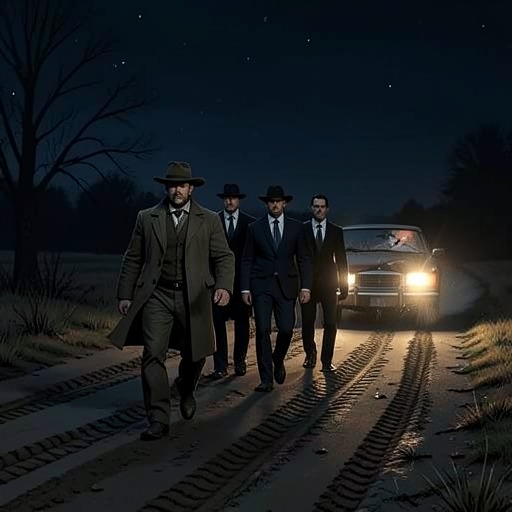
White’s younger brother, Doc White, was also a former Texas Ranger who joined the Bureau. Gruff and hard-drinking, he carried a bone-handled revolver and a knife in his boot, and a relative described him as rough and ready. The brothers belonged to a small group of former frontier lawmen known inside the Bureau as the Cowboys. Their presence embodied an institutional tension: the agency’s formal limits and emerging bureaucratic order depended, in part, on men whose methods and instincts came from the older law-enforcement culture they feared was passing away.
The Unfinished Work of the Archive
The Bureau of Investigation’s records became evidence not only of what agents had learned but of how much remained uncertain. Decades later, research into the Osage murders gathered files from the Bureau alongside court, forensic, financial, and family materials in an effort to revisit cases that officials had treated as closed. Yet even a vast archive could not restore testimony that had disappeared or resolve killings for which investigators had left no conclusive account. The surviving documents could sharpen suspicion without converting it into proof, and families continued private inquiries, sometimes weighing whether a dead relative or trusted acquaintance might have been responsible. In that afterlife of the investigation, the Bureau’s paper trail offered neither a final verdict on every murder nor release from uncertainty: it preserved clues and omissions together.
A Contested Federal Experiment
The Bureau of Investigation began without the clear legislative authorization that might have settled the question of a national police force. President Theodore Roosevelt’s attorney general created it in 1908 to fill a gap in federal law enforcement, acting without Congress’s approval amid opposition to centralized policing; one congressman dismissed the agency as a “bureaucratic bastard.” Its assignments reflected that unsettled role. Agents handled antitrust and banking violations, federal-prison escapes, crimes on Indian reservations, and the interstate shipment of stolen cars, contraceptives, prizefighting films, and smutty books. The bureau’s early history was therefore not a smooth rise toward a settled national institution: it was a small, contested agency charged with an unusually broad assortment of federal matters, even as its authority remained narrow.